


_w=200_h=165_pjpg.jpg?v=eda6da11e80078b43c7c0b57347c5022a821e27c)
_w=200_h=158_pjpg.jpg?v=eda6da11e80078b43c7c0b57347c5022a821e27c)


India brings The Jungle Book to life, its wild habitats home to Rudyard Kipling’s cast of magical creatures, including Shere Khan, the majestic Bengal tiger.
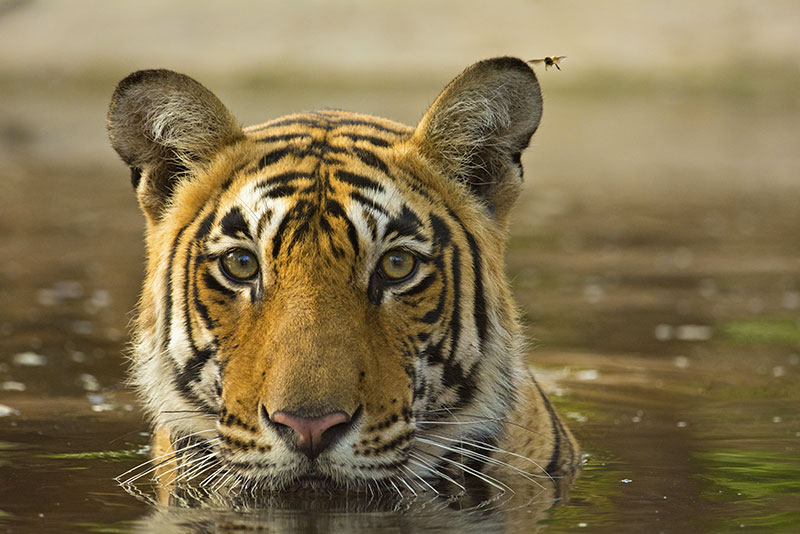
India is the best place to see these endangered big cats in real life, home to more than 70 percent of the world’s entire tiger population. Here’s everything you need to know about how to spot tigers in India, including when to visit and which national parks to stay in for tiger safaris.
Where can tigers be found in India and why are they so revered?
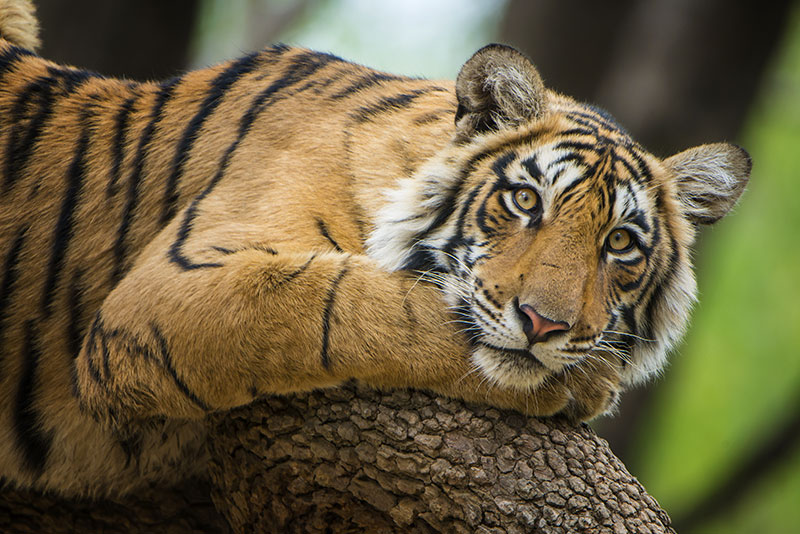
Bengal tigers, the most common subspecies of tiger, are found practically all over India except for in the northern and western tips of the country. The animals have become entwined with Indian culture, appearing in many myths and legends. Typically, they symbolise strength and power; tigers are the largest big cats, weighing in at around 300kg and each one has its own unique striped coat.
How many tigers are there in India?
The latest official figures from the All India Tiger Estimation 2022 (released April 2023) confirm a minimum of 3,167 wild tigers in India, with estimates reaching as high as 3,682. That accounts for roughly 70-75% of the world's remaining wild tiger population.
Fieldwork for the next nationwide census is underway in 2026, with updated population figures expected to be published in 2027.

What are the best national parks to spot tigers in?
India has a range of national parks across the country that act as vital sanctuaries for wild tigers. Here's a look at some of the best places to spot tigers in India:
Kanha: is one of India’s oldest reserves, home to over 100 tigers. Set in the heart of central India, its thick forests and meadows served as inspiration for The Jungle Book. Stay among huge sal trees at Singinawa Jungle Lodge, where you can take safaris and exciting night drives to track down tigers.
Pench: also provided inspiration for The Jungle Book and now acts as a sanctuary for around 40 tigers, as well as rare black panthers and Indian wolves. For an unrivalled perspective of the remote landscape, stay at Pench Tree Lodge and spend your days on safari.
Bandhavgarh: is a 200-square-mile eden of forests, grasslands and valleys decorated with ancient cave paintings. Declared a national park in 1968, Bandhavgarh now has a population of around 140 tigers which you can spot on drives from Samode Safari Lodge, just 30 minutes from the park.
Panna: also a former royal hunting ground, Panna became a national park in 1981 and an official tiger reserve in 1994. To date, many tigers have been brought in from surrounding parks to breed and an estimated 60 tigers now live there. This lesser-visited park offers uncrowded safaris and superb viewings along the Ken River.
Bandipur: set on the edge of the atmospheric Western Ghats in Karnataka state, Bandipur has around 170 tigers in its reserve. You also have a chance of seeing everything from elephants to golden jackals and Indian bison. Eco-friendly Serai Bandipur lodge on the fringes of the reserve acts as a convenient base for wildlife tours.
Ranthambore: once a hunting ground for the Maharaja of Jaipur, Ranthambore now has around 80 tigers that roam just 500 square miles. This makes it one of the most highly-populated parks in India and good for sightings, but also one of the busiest places for a safari.
Sariska: Within easy reach of the heart of the Golden Triangle, the Sariska Tiger Reserve and its 29 resident tigers are a testament to the huge ecological efforts by the government and Wildlife Institute of India. Spanning 800 square kilometres, it not only harbours tigers but sambar deer, chital and serpent eagle as well as archaeological remnants which you can explore on game drives at Sariska Safari Lodge.
When’s the best time to spot tigers?
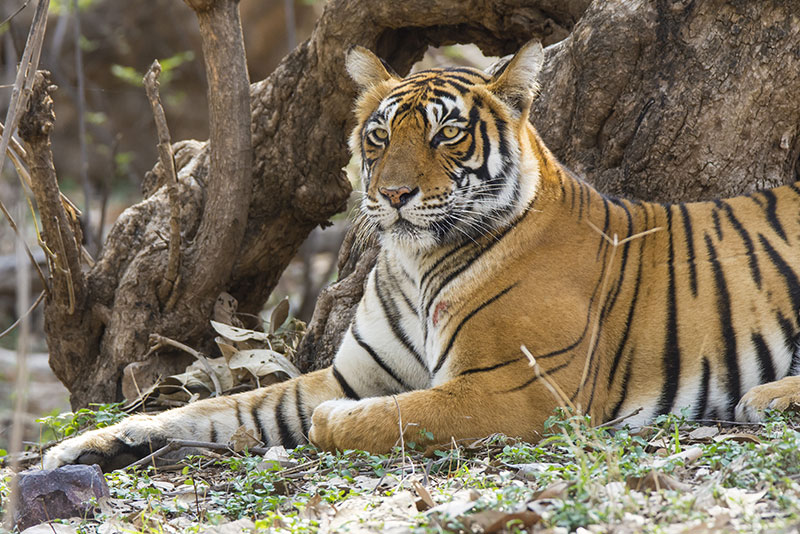
Spring is a great time for spotting tigers in India, between February and mid-May. As temperatures increase, long grass dies back and the animals are drawn to rivers and watering holes, which increases your chances of a sighting.
Why are tigers endangered?
According to the WWF, at the beginning of the 20th century as many as 100,000 tigers roamed across Asia and parts of Iran, Afghanistan and Pakistan. Due to hunting and deforestation, which decreased tigers’ land range to just five percent, the population shrunk dramatically to only 3,200 in 2010, causing them to become an endangered species. Sadly, three subspecies of tiger, the Balinese, Javan and Caspian, have already become extinct and there are now more tigers in captivity than there are in the wild.
In response, the WWF has designated tigers a priority species, given that they’re so critical to the overall eco-system, and in 2010, they launched an urgent global effort to save them. That same year, 13 tiger-range countries commited to the TX2 initiative, a pledge to double wild tiger numbers by 2022 through habitat protection, community outreach and anti-poaching work. It’s thought that there are now an estimated 5,500 tigers in the wild, according to the most recent IUCN global assesment (2023), thanks largely to these ongoing conservation efforts. While numbers are recovering in countries such as India and Nepal, tigers remain endangered due to habitat fragmentation, illegal wildlife trade and human-wildlife conflict.
What can tourists do to help tigers in India?
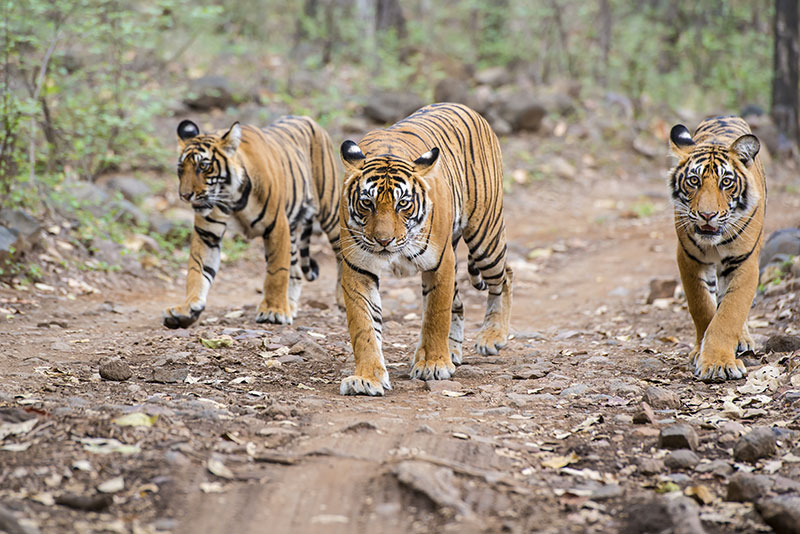
Visit India’s national parks and take ethical safaris to contribute to the local economy and, in turn, help protect tigers in India. You can also spread the word about tiger conservation and support programmes like Project Tiger, set up by the National Tiger Conservation Authority, or consider donating to Born Free's Tiger Conservation work.
What are the top tips for spotting tigers in the wild?
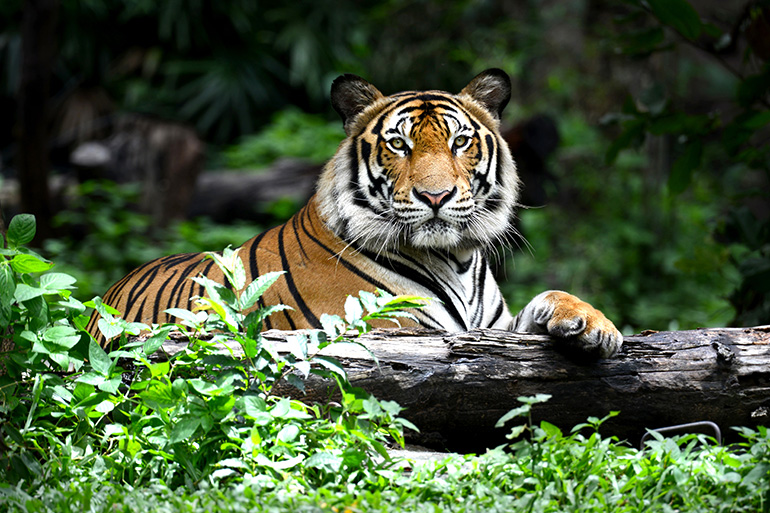
Firstly, be patient. Tigers are shy animals and it can take days to find one while you’re on safari; we recommend staying at least three nights in a national park for the best chance of spotting one. Head out with an expert guide who knows the area intimately, including all the popular tiger haunts.
Inspired?
If you're keen to spot these regal creatures in their natural habitat, then take a look at our In Search of the Bengal Tiger and Taj Mahal, Tigers and Teens suggested itineraries and read more about our India Wildlife holidays.
The information within this feature is correct to the best of our knowledge at the time of print.


_w=24_h=25.png?v=eda6da11e80078b43c7c0b57347c5022a821e27c)
_w=24_h=25.png?v=eda6da11e80078b43c7c0b57347c5022a821e27c)
_w=24_h=25.png?v=eda6da11e80078b43c7c0b57347c5022a821e27c)


