Middle East situation: we’re calling all customers with holidays booked up to 24th April in order of departure date. Latest update



-
Africa
-
Arabia
-
Asia
-
Australasia & Pacific
-
Caribbean
-
Central America
-
Europe
-
Indian Ocean
-
South East Asia
-
North America
- View all destinations

_w=200_h=165_pjpg.jpg?v=eed9279541dd7b52404fb4a7f716eaca487cc2a2)
_w=200_h=158_pjpg.jpg?v=eed9279541dd7b52404fb4a7f716eaca487cc2a2)
- Holiday type
- Brochures
- Collections
- Articles
- Where to go when


Speak to one of our experts now about this offer

-
-
Rating {{ ratingFilters.length }}

- 4 Stars{{ratingsCountWith('4 Stars')}}
- 5 Stars{{ratingsCountWith('5 Stars')}}
-
Holiday type {{ holidayTypeFilters.length }}
- Honeymoons{{holidayTypeCountWith('Honeymoons')}}
- Romance{{holidayTypeCountWith('Romance')}}
- Safari holidays{{holidayTypeCountWith('Safari holidays')}}
- Sustainability{{holidayTypeCountWith('Sustainability')}}
-
-
- Kuoni recommended
- Name (A-Z)
- Rating (High to Low)
- Rating (Low to High)
- Price (High to Low)
- Price (Low to High)
- {{ filter.text }}
- Clear all
Visit rhinos and chimps at the Ol Pejeta Conservancy
Don’t miss the chance to see the world’s last two northern white rhinos, as well as black rhinos and rescued chimps at the Ol Pejeta Conservancy. Located in Laikipia, the 90,000-acre conservancy was once a working cattle ranch in colonial times and is now a sanctuary for wildlife, including the Big Five. Partly established by the Jane Goodall Institute, Sweetwaters is home to 35 rescue chimps who roam around a 300-acre area by the river, returning to enclosures to feed and sleep.
The Ol Pejeta Conservancy has one of the highest densities of predators in Kenya and offers some of the country’s most exciting game drives. The main draw at Ol Pejeta is definitely the rhinos. As the largest black rhino sanctuary in East Africa, it offers sightings of these critically endangered animals. When the programme started in 1993, there were just 20 black rhinos in the park and now there are over 140. Ol Pejeta is also home to around 30 southern white rhinos, who, as a species have been brought back from the brink of extinction. In addition, there’s a unique opportunity to see the world’s two remaining northern white rhinos, who live in a 700-acre enclosure that’s guarded around the clock.
Next visit the Sweetwaters Chimpanzee Sanctuary. When the Burundi Rescue Centre had to close in 1993 because of civil war, Ol Pejeta stepped in to save the animals. Chimps aren’t native to Kenya and this is the only place in the country where you’ll see them.
Mugie anti-poaching unit
Get an inside look at the anti-poaching unit in Mugie Conservancy, where you’ll meet the adorable bloodhound tracker dogs. The dogs have been trained to sniff out poachers since they were puppies and are highly skilled in scent work. Although there isn’t much illegal activity on the conservancy, the dogs are sent all over Kenya on missions and work locally on different projects. You can take part in a scent tracking demonstration, setting a trail with one of the rangers and then hiding while the dogs track you down.
While at Mugie, their handlers keep the dogs sharp with daily training. It’s amazing to see the bond between the dogs and the trainers. Guests can visit the unit and get to meet the bloodhounds, who are super friendly and slobbery – they love people. However, when it’s time to train and their harnesses go on, the animals go from being wriggly, excitable dogs to extremely focused workers. The scent tracking is a really fun experience, kids in particular find it thrilling to be hunted by these smart dogs.
Track lions at Mugie Conservancy
Joining one of Governor’s expert wildlife guides, track down lions that are being studied as part of the conservation programme taking place at Mugie Conservancy – Lion Landscapes. With your guide, you will venture out to find the two collared lionesses that are tracked to better understand the pride’s movement and the relationship between human activity, such as farming and wildlife.
Using the guide’s expert knowledge of lion behaviour, combined with tracking equipment, you may see female lionesses that call Mugie Conservancy home.
Throughout the tracking experience, you will work with the guide to look for signs of lion activity, including paw prints and scat. These clues will give you an idea of how recently the animals had been in the area and makes tracking them even more thrilling.
This private 50,000-acre wildlife conservancy lends itself to intimate wildlife encounters, without the crowds. Along the way, you may see other wildlife that inhabit Mugie Conservancy including Thomson’s and Grant’s gazelle, impala, hyenas and elephants, as well as endangered species, such as reticulated giraffe and Grevy’s zebra.
Farming, community and conservation work at Mugie House
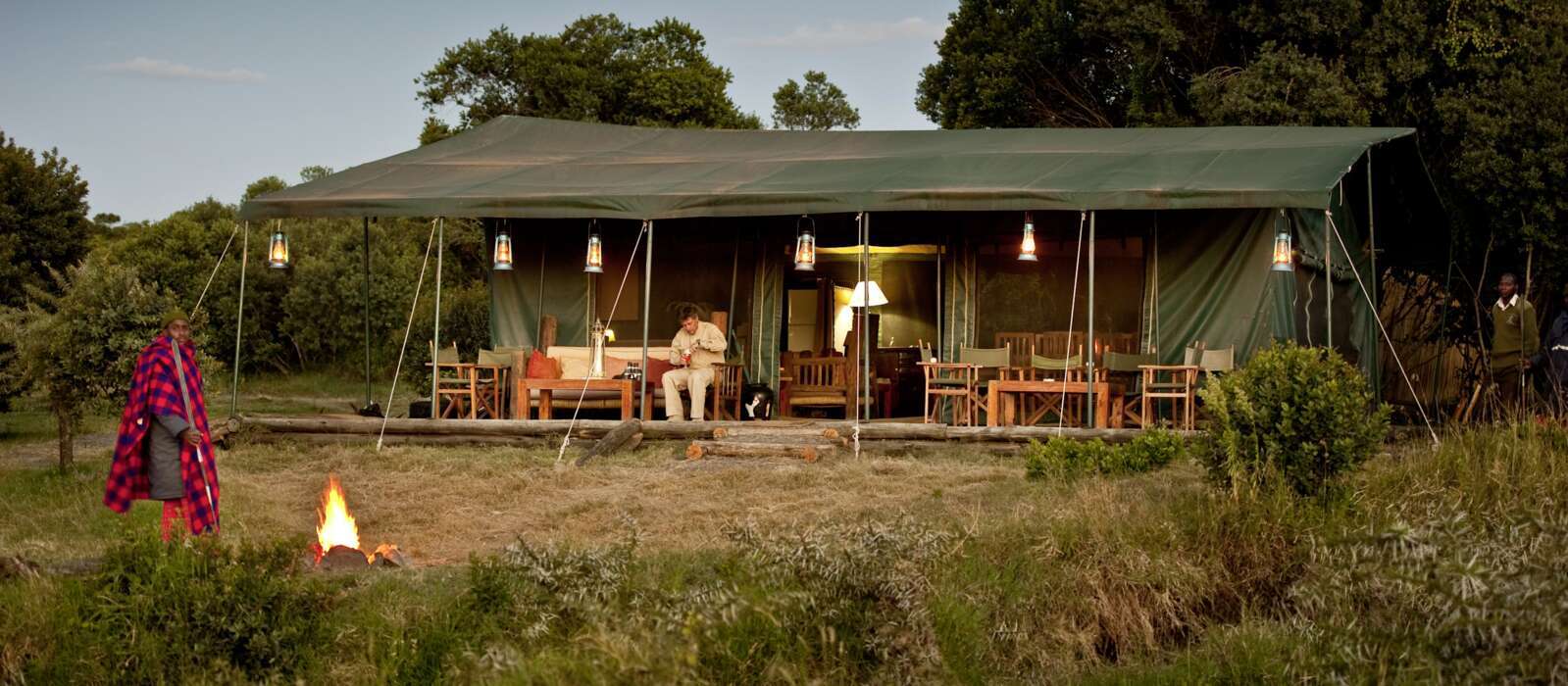
When you stay at Mugie House, you’ll get to learn about life on a real Kenyan ranch and get involved with their community and conservation work. Located on the 50,000-acre Mugie Conservancy, it was set up to protect ecosystems for native wildlife like big cats and elephants. The Mugie Conservancy is home to endangered and rare species, from Jackson’s hartebeest to the reticulated giraffe, Grevy’s zebra and oryx – all of which you might spot during a game drive in the area.
The conservancy also preserves natural wildlife corridors that many of these animals use to roam between the Laikipia plateau, the Matthews Range and Samburu. Just by staying at Mugie House you’re helping to fund the protection of this area. Some of other conservation projects you can get involved with include re-planting indigenous trees and taking part in big cat tracking when you go out with a safari guide to track lions that have been collared for research purposes and to prevent conflict between the animals and local herdsmen and their cattle.
Mugie House is a traditional Kenyan cattle ranch and they love to show guests how they work. For instance, every Saturday, the animals get taken to the spray area to get rid of ticks and you can go down there to watch the process, it’s a colourful and often noisy experience. In the evening, you can also watch the animals being herded back into their predator-proof enclosures and help count them in. It’s a great insight into everyday life on a working Kenyan ranch. As part of the farm tour, you’ll usually visit the vegetable gardens and meet Tala, an orphaned giraffe who lives near the office and loves interacting with guests.
Mugie lies on the very edge of the Pokot community’s land. These indigenous people are nomadic pastoralists permitted to graze on Mugie, similar to the Maasai and Samburu, but lesser-known. Their culture is very distinct from these groups, they don’t wear such bright colours and make unique glass beadwork. There aren’t many places where you can encounter the Pokot in Kenya, so interacting with them is a unique, authentic experience for guests. Governors’ helps to support the Pokot with funding for schools and health clinics that you can visit while you stay at Mugie House.
E-biking Safari Adventure at Governors' Mugie House
Discover Mugie’s landscape and wildlife on a guided electric mountain bike safari. Exploring the Mugie Conservancy by e-bike offers an eco-friendly way to journey through breathtaking landscapes, with many chances to spot wildlife up close. For the best experience, set out in the early morning or late afternoon when it's cooler and animals are more visible. As you ride by, expect curious looks from giraffes, zebras, oryx, warthogs, elephants and impalas. Guests must be over 12 years for this activity, and groups are limited to four people at a time.
Visiting the Pokot
Guests at Governors’ Mugie House can take a trip to a nearby village to meet the Pokot people and discover the vibrant traditions and customs of this tribe, originally from the districts of West Pokot and Baringo. Women perform lively songs and dances as an elderly lady crafts cloth from goat hide. Nearby, a village elder demonstrates fire making while other men play a quick game of ‘bao’ in the sand. You may also get a look inside in one of their homes where milk is stored in gourds.

_w=24_h=25.webp?v=eed9279541dd7b52404fb4a7f716eaca487cc2a2)
_w=24_h=25.webp?v=eed9279541dd7b52404fb4a7f716eaca487cc2a2)
_w=24_h=25.webp?v=eed9279541dd7b52404fb4a7f716eaca487cc2a2)
Talk to an expert today
Your dream holiday is just a phone call away
Call us on 0800 294 9706


Monday: 10am - 5pm
Tuesday: 10am - 5pm
Wednesday: 10am - 5pm
Thursday: 10am - 5pm
Friday: 10am - 5pm
Saturday: 10am - 5pm
Sunday: Closed