


_w=200_h=165_pjpg.jpg?v=39e4bf01be219f50bf8dc63fc019cc6154137482)
_w=200_h=158_pjpg.jpg?v=39e4bf01be219f50bf8dc63fc019cc6154137482)


Tea has been an essential part of Vietnamese family life for thousands of years. More than just a refreshing drink, it is believed to calm and centre the mind, as well as help ward off a number of common ailments. A staple at celebrations and family gatherings, tea and its associated customs are closely tied to ideas of hospitality, respect for elders and a harmonious relationship with nature.
Tea drinking in Vietnam is generally informal, without the highly structured ceremonies found elsewhere. Even so, it plays an important role in everyday interactions, commonly served at the start of business meetings, during meals or while catching up with friends. It is also linked to quieter, reflective pursuits such as poetry, gardening and scholarly study, reinforcing its place as a drink for contemplation as much as conversation.

Tea production in Vietnam
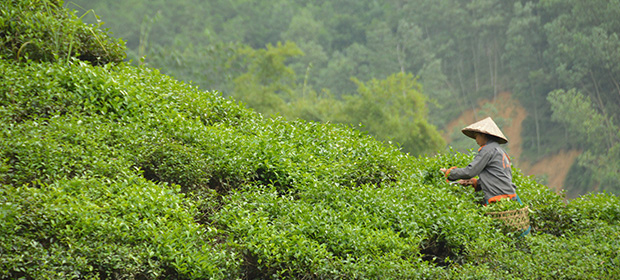
Although tea has been enjoyed in Vietnam for centuries, domestic production began in the 1880s when French colonists established the country’s first tea plantations in the area around Phú Thọ, northwest of Hanoi. Since then, Vietnam has become one of the world’s leading tea producers, currently ranking seventh globally.
Much of the country’s tea is grown by independent smallholders, many of whom are contracted to supply a portion of their harvest to state owned farms or large processing plants. The remainder may be processed independently as distinctive artisanal teas or sold directly on the open market, contributing to the diversity of styles found across the country.
Common varieties of Vietnamese tea
Vietnamese tea drinkers tend to value purity and subtlety, favouring light, delicate flavours. While small quantities of black, white and oolong teas are produced, green tea remains by far the most popular and is typically enjoyed without added flavourings.
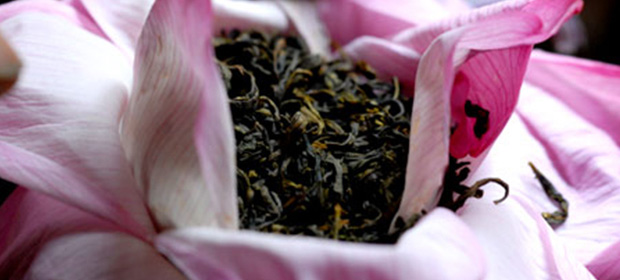
Flower scented teas are also widely appreciated in certain regions. A notable local speciality is lotus tea, traditionally made by sealing high quality green tea leaves inside a lotus flower and leaving them overnight to absorb the blossom’s fragrance. Jasmine tea, aglaia tea and chrysanthemum tea are among the other floral varieties you may encounter.
How to drink tea like a local in Vietnam
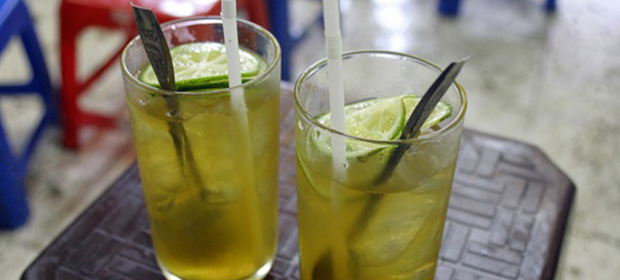
Rather than following formalised rituals, Vietnamese tea drinking is relaxed, communal and woven into daily routines. Tea is commonly brewed strong and served hot in small cups – even in warmer weather – and topped up frequently during conversation. In homes and local cafés, the first brew is often poured away to ‘wake’ the leaves before the tea is served, a quiet gesture of tradition rather than a fixed rule. Tea is frequently offered unprompted by shopkeepers, market vendors or hosts, and accepting a cup is seen as a simple sign of courtesy and connection. When sharing tea with elders, it is customary to pour for others before yourself as a mark of respect. While hot green tea remains the everyday mainstay, iced tea (trà đá) is a constant presence in towns and cities, often served free with meals or alongside street food. Sitting on a low plastic stool, sipping tea between bites, is one of the most natural and authentic ways to experience Vietnamese daily life. For a deeper insight, travellers can visit traditional tea houses or tea growing regions, where tastings reveal how factors such as altitude, leaf age and brewing time influence flavour.
Where to enjoy Vietnamese tea
Vietnam has five principal tea producing areas: the northern highlands, the northwest, the northern and central coastal regions, the midlands, and Việt Bắc, an area to the north of Hanoi. Lâm Đồng province in the central highlands is the country’s largest tea growing region, with Thái Nguyên in the northeast close behind. Northern highland areas such as Yên Bái are also known for their ancient tea forests.
You can traverse many of these regions on an all-encompassing trip such as our Complete Vietnam or Best of Vietnam suggested itineraries or simply sample hot or iced tea from local vendors on our street food tour of Hanoi.
Inspired?
Sample Vietnamese coffee or tea at a local café in the historic French Quarter oh Hanoi while learning about the daily life and culture of Vietnamese locals.


_w=24_h=25.webp?v=39e4bf01be219f50bf8dc63fc019cc6154137482)
_w=24_h=25.webp?v=39e4bf01be219f50bf8dc63fc019cc6154137482)
_w=24_h=25.webp?v=39e4bf01be219f50bf8dc63fc019cc6154137482)


