| Highlights |
Sharm El Sheikh
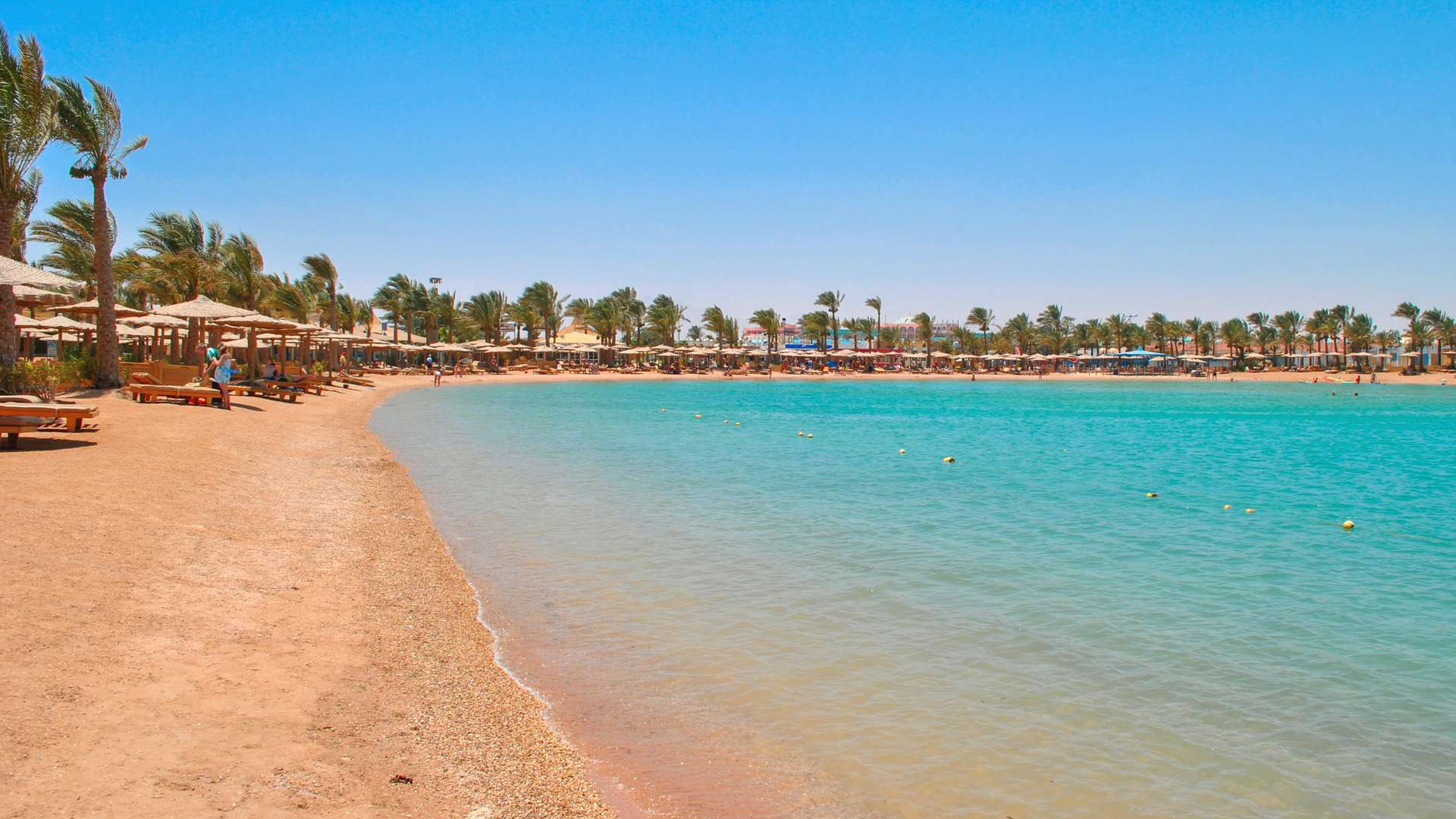
Until 1967, Sharm el Sheikh was merely a tiny outpost where customs men could keep an eye open for smugglers. Then its charms and tourist potential were recognized, and today it has an airport, fully developed hotel infrastructure, and well-organized sports facilities. Visitors can take full advantage of the hot, sunny weather, glorious beaches and underwater paradise without roughing it-and without the crowds.
The town is divided into two parts: the administrative centre, perched on top of a cliff above the deep harbour, with wide roads and spacious parks, and, some 7 km (4 miles) to the north, the newly developed seaside resort at Na'ama bay. It's an idyllic setting. The clear turquoise sea lapping the sandy, picturesque coves and the glorious backdrop of the Sinai mountains inspire many an artist and photographer, especially when the rising or setting sun bathes the scene in rosy, golden colours.
A stellar attraction of Sharm el Sheikh is a sunset safari into the hills for a romantic barbecue with the local Bedouin, sometimes accompanied by an after-dinner show of music and folk dancing under the desert stars.
In an area of sand dunes and arid hills, the life under the Red Sea is far more prolific and colourful than that on land, and diving and snorkelling are among the major attractions. Enthusiasts are well catered for, with several excellent centres offering tuition, organized trips and equipment for hire. The coral reef and submarine flora and fauna here rank among the most beautiful in the world, second only to Australia's Great Barrier Reef. Through the crystal-clear waters you can see far down into the depths. The coral is inhabited by thousands of sea anemones and starfish, clown fish, pyjama fish-and the deadly stone fish.
The southernmost tip of the Sinai peninsula, Ras Mohammed, where the gulfs of Aqaba and Suez meet the Red Sea, has been turned into a national park. Even if you aren't specially attracted to underwater sports, it's well worth the trip to this land's-end precipice to peer down into the depths. For those interested in snorkelling or scuba diving, there are over 1,000 species of fish to choose from (to spot or photograph, not to catch), some 150 different varieties of coral, and marine fossils ranging in age from 75,000 to 20 million years. The park's staff of rangers can help you locate the best creeks, coves and cliff-top observation decks equipped with telescopes for the spectacular views.
Others who are happy just wading out into the shallow waters-with fine sand underfoot-may spot a parrotfish, or a butterflyfish or two. Parrotfish live up to their name with their beak-like mouth and bright green and blue colour. The fish can change sex from female to male and alter their colour accordingly, adding some virile red strips to their rear ends. In butterflyfish, also brightly coloured with black, gold and silver stripes, the sides of the body are flattened, allowing them to wiggle through crevices in the coral.
Other spectacular fish you might spot are the blue and yellow emperor angelfish, a very haughty-looking fast swimmer, the golden dotty back with a soulful stare, and the bulbous prickly pufferfish who blows himself up to twice his size to scare off enemies. The flashy yellow sea slug, frilled with purple flounces, dances close to the sea bed. Ras Mohammed attracts three species of turtle: green, leatherback and hawksbill.
One of the park's more attractive features is its clumps of tropical mangrove, rarely found this far north; they're a haven for migrant birds such as storks, buzzards and ospreys. And who knows, you may even see one of the mermaids who, the Bedouins reckon, occasionally appear in this mystical corner.
|
| Shopping |
Try your luck at Khan el-Khalili, Cairo's celebrated bazaar, where you can still practise your bargaining skills though the custom is dying out. There's also a shop specializing in handicrafts right next to the Egyptian Museum; others are scattered through the touristic parts of Cairo with more at Giza, near the pyramids.
The alabaster for cigarette boxes and other decorative items comes from the Nile valley.
Brass and copper are hammered into trays, coffee sets and samovars. You can watch it being done at Khan-el-Khalili.
Egyptian cotton, among the finest in the world with its long fibres and smooth finish, is used in gallabiyas, those long, flowing robes sold for men and women. Shirt- and dressmakers are ready to provide you with custom-made cotton clothing in next to no time.
The jewellery can be extremely beautiful, whether it's based on old designs or modern. It is good value, too, if you know how to choose wisely. Exquisite workmanship goes into gold and silver pieces set with precious or semi-precious stones. Take your pick from pharaonic styles inspired by King Tutankhamun's treasure.
Leather goods such as handbags, satchels and wallets, make interesting buys, but be sure to examine each article carefully for flaws.
The excellent woodwork includes mashrabiya, the delicate lattices through which Muslim women used to dare a timorous look at the world. Marquetry objects are finely designed and executed-choose perhaps a chess board or cedar or sandalwood box skilfully inlaid with bits of ivory, mother-of-pearl and ebony. |
| Eating/Drinking |
It's intriguing to think that as a modern-day visitor to Egypt you might be eating some of the same dishes the pharaohs did. More recent history has also had a culinary impact, with Italian, Turkish, French and English influences all in evidence.
To whet your appetite, you could try molokhia, a soup containing leafy green vegetables, garlic, pepper and coriander, usually eaten with rice. Fool is a thick and spicy stew of beans flavoured with tomatoes, finished off with a dollop of olive oil and lime juice and some piquant taamia vegetable paste. Turshi (spicy pickled vegetables) and araq inab (stuffed vine leaves) also show up frequently as starters. The flat bread is well suited for scooping up mouthfuls of leben zabadi (yoghurt), tahina (sesame seed puree, sometimes flavoured with mint) or its tangy variant baba ganoug (smooth puree of baked aubergine, lemon and garlic).
For a main course, what could be better than some fresh fish from the Mediterranean, often treated to an unexpected pinch of cumin. Large Alexandrian prawns are equally delicate, particularly grilled over charcoal. Kebabs, succulent chunks of lamb or mutton coated in spices and threaded on a skewer, are cooked in this way too, as are kofta, balls of spiced, minced lamb. Alternatively, shwarma is the Egyptian lamb equivalent of the Turkish doner kebab: layers of meat stacked on a vertical spit and shaved off as cooked. Other meat specialities are quail or pigeon, simply grilled or stuffed and roasted.
To finish off your meal, the cheeses may be too salty for your taste, but the fruit, including fresh dates (red, yellow, black or brown), is perfectly delicious. If calories are of no importance, try some baklava, the many-layered super-sweet pastry stuffed with nuts and honey that is famous throughout the Middle East, or its variant atayeef filled with cheese. If you spot it on the menu, don't pass by ommu-'ali, a dessert of rice, milk, almonds, raisins and coconut.
Vineyards in the delta have been cultivated for centuries. Reds include Omar Khayyam and Chateau (or Kasr) Gianaclis and the slightly drier Pharaons. The whites are of varying quality but generally better than the reds: Nefertiti, Cleopatra, Gianaclis Villages and Cru des Ptolemees. Rubis d'Egypte is a popular rose. Local beer, Stella or Stella Export, is quite satisfactory.
Zibib is the Egyptian equivalent of the Mediterranean aniseed-flavoured brandy (ouzo or pastis), made here from a distillation of grapes, or, yes, dates. For an agreeable soft drink, try karkadeh, often served cold at breakfast. Both tea and Turkish coffee are good. Most foreigners prefer the latter when it is brewed mazbut (with a middling amount of sugar). Saadeh is with no sugar. |